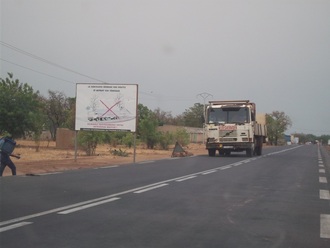
 This picture shows a sign in Burkina Faso warning against the harm to roads and vehicles from overloading, along side an example of a not-overloaded truck.
Burkina seems to be more efficient about actually building their roads than Ghana. A year ago when I visited Ouagadougou, the road there was completely under construction. This time, from the border to Ouaga was all beautiful, new road. It's been two years and counting, and Ghana has no progress to show for the work they have been doing between Accra and Kumasi, the two largest cities in the country. To be honest, though, I think the real reason that Burkina's roads are better than Ghana's is that no matter how much you overload a donkey cart, it won't do much to the road.
6 Comments
My last night in Ouagadougou, I enjoyed a lovely Vietnamese dinner, then went to the street to find a taxi to my hotel. It wasn’t late, but it was just starting to rain, and taxis were scarce, so I started walking in the direction of the hotel, knowing I would be more likely to find a taxi that way.
I was crossing an intersection when a man started yelling “La blanche! La blanche” (White! White!) I decided to ignore him, as this rude by any measure. The man then ran up behind me, and grabbed me around the neck with both arms. I had no idea what he was doing, so to be on the safe side, I screamed. I was able to duck out of his arms and push him away. He didn’t put up much resistance, so I decided this was just his idea of sport. I hit him across the face, then walked away, and he let me go. Hitting an assailant wasn’t the smartest thing—I probably should have taken off running—but I’m glad I did. What was he thinking? He didn’t strike me as being mentally ill in any way. The only conclusion that I can come to is that since I was clearly a foreigner, and because he thought I was physically weak, he felt like he could get away behavior that would be unacceptable in his own community. The more disturbing thing is that, even though there were half a dozen people in the immediate vicinity, no one did anything. No one tried to help, or even asked if I was okay. This was shocking to me, especially because in Ghana, people would have come running from all around. I’m not sure why no one helped—if it was because it was beginning to rain and they wanted to go home, or if it was because I was a foreigner, or if that’s just the culture in Ouagadougou. If you are reading this and thinking, “Poor Liz—what a god-awful country!”, then I have news for you: men do stuff like this to women all the time in the United States, and they get away with it. Ask any young woman living in a city like New York or DC when the last time was that she was catcalled on the street, or grabbed in a bar or club. Ask her if anyone said anything to the person who did it. The fact is, wherever conditions exist that allow people to harass others without consequence, there will be people who take advantage of that. I think there are two cultural tendencies that contribute to those conditions: 1. A general tendency not to get involved. This is something that you see a lot more in the west than in places like Ghana, where society values individualism less and communities are tightly-knit, creating more incentive to enforce good behavior. But everywhere, to some extent, people are often hesitant to get involved, either because of fear, or because of inconvenience. The result is that bad behavior goes unpunished. This is especially consequential in places where formal law and order is lacking. 2. In-group bias. I think that everywhere, people who are “different” are more likely to be targeted and less likely to be helped. (They are probably more likely to be targeted BECAUSE they are less likely to be helped.) These people might be vulnerable because they don’t speak the local language, and don’t have local social connections or social standing, but I think there is also a tendency for people who are different to be more objectified—they are seen first as “a white” or “a black”, rather than as another person. People have less problem with them being objects for others’ amusement, and they are less concerned with their welfare than they would be someone who appears to be from their same community. There are people who would argue that in-group bias is okay or even good, and that it encourages social cohesion. I argue that the cost of in-group bias is that the most vulnerable people are ignored when they need help. So if you don’t like what happened to me, I urge you to do two things. First, make yourself more of a “social enforcer.” Being a social enforcer can be intimidating. Natural social enforcers often have a high tolerance for stress. But generally, a person who enforces good social behavior, for example by chiding someone who cuts in line, are viewed favorably by everyone who observes the interaction. Second, try to fight your own in-group bias, and make an effort to reach out to those people who seem especially out of place. If they look out of place, they probably feel that way even more so. Treat them the way you would want your mother, or your sister, or your daughter treated if she were alone someplace strange. Interestingly, the two things I am encouraging—social enforcement and reducing in-group bias—are typically associated with opposite sides of the political and social spectrum. Social enforcement tends to be associated with conventional, authoritarian, and duty-oriented attitudes. Reduced in-group bias tends to be associated with liberal, individualistic, and intellectually-oriented attitudes. I don’t think this is an accident: all of these values are good; that’s why there are people that value them. If we all ascribe to each other’s values a little more—if social enforcers can apply their protections to a wider group of people, and if those who care about people who are different can make themselves into social enforcers—I think we would do better at protecting the most vulnerable from those people who have no values at all. You should not ever experience the Kintampo Police Escort Caravan. It only happens in deep night, and long-distance travel at night is generally unadvisable. I shouldn’t have had to experience it either, but because of a series of inconveniences, beginning with a driver and ticket seller lying to me about the destination of the car I bought a ticket for, my travel took about 10 hours longer than expected. The experience of the Kintampo Police Escort Caravan begins with waking up to find that your bus (or in my case, trotro) has stopped at the side of the road in the middle of the bush, in Kintampo—the district in Ghana most notorious for armed robberies on the road. The first-timers wonder why we are making sitting ducks of ourselves, before noticing the other vehicles also pulled over. The veterans hop out to buy jollof rice and jugs of palm oil from the vendors capitalizing on the situation. 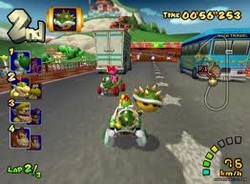 The Kintampo Road, 2am After waiting 30 minutes to an hour, the police arrive with the caravan coming from the other direction. Everyone scrabbles to load back into their cars. Everyone starts off, and the ensuing scene looks less like an orderly security convoy than it does Mario Kart: with traffic going one direction, the cars drive all over the road, the faster ones overtaking the slower. The impression is only strengthened by the peppy hiplife music emanating from the trotros. As an overloaded trotro hit bumps in the road, it would not be that farfetched to imagine plantains flying off its roof and landing in the path of an NGO truck driven by Yoshi, causing it to go into a cartoonish tailspin. The police leave the cars to travel through Kintampo township on their own. Once on the other side of Kintampo, the bus, trucks, trotros and cars gather to wait for a second escort. I have never heard of a car being robbed while in the convoy. The convoy also likely increases safety be reducing the risk of head-on collisions at night, since traffic only moves one way at a time. It adds about 2 hours to the 5 hour drive, though. By the end of the night, I was very familiar with the Dagbani phrase “Ti chema!”—“Let’s go!”
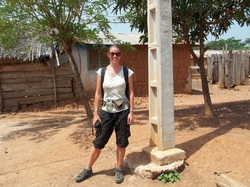 The heavily-fortified Ivory Coast border Some of my respondents are in Ivory Coast. They end up in our sample because they have visited health facilities in Ghana.
Why do Ivoirians come to Ghana for health care? Ghana has a very affordable national health insurance program. It’s not easy in rural areas to verify who lives where, so Ivorians in border areas occasionally sign up for health insurance, reporting that they live in a village on the Ghanaian side. Sometime they even give a typically-Ghanaian name, in place of their French-ier real one. This is bad for Ghana’s government budget, but it’s bad for us too, because it means that we are trying to find respondents with fake names, and we don’t even know what village they come from. Our typical strategy is to go to the handful of villages near the border, ask for anyone who might have visited the Ghanaian health facility, and see if they are the person we are looking for. You can imagine, when we walk in and essentially ask “So anyone around here defrauding Ghana Health Services?”, how many people yell “Me, me!” Surprisingly, though, we actually find people. I spent one day serving as moto driver for one of my surveyors, Nana, in the border area. The road was rough—in many places impassable by car—and the surveyor had never been on a moto in his life. When we first arrived at the health facility, still in Ghana, I asked the surveyor how far it was to the border, expecting it to be maybe a mile or two. He pointed to a spot two meters to my left. We crossed into Ivory Coast about three times that day. Most of the borders weren’t even marked. There was one border crossing where a couple of Ivoirian border police were playing cards. They were happy to give us directions to the Ivorian village we wanted to visit. Once across the border, not much changed, except that people in rural villages spoke French the same way they speak English in Ghana—that is to say, not much. I was able to communicate more with my tiny bit of Twi than with my more extensive (if badly pronounced) French vocabulary. Nana, fluent in Twi, was fine. The day ended with several unfruitful hours looking for “Sabrina”. I felt pretty good though. On the drive home, I smugly told Nana that there were not too many PAs in IPA who would have driven these roads and asked for directions in French and Twi. He winced and rubbed his seat as we hit a bump, and I am pretty sure he wished he had been with one of those other PAs. When I rolled into Tamale after 12 hours on the road, my thoughts were focused on important priorities: should I bring vodka or wine for my hosts? I pulled into Quality First to make my purchase, cutting through the pedestrian and bike zone into the parking area, per normal Tamale traffic conventions.
Immediately, a police officer converged on me and pulled my keys from the ignition, yelling at me for driving in the bike lane. He then ran off to grab keys from two other motos--like I said, I was following Tamale traffic conventions. Most official traffic laws are never enforced in Tamale. Residents are left to develop their own traffic code that allows everyone to move around efficiently and mostly safely. However, every few months the police pick a rule to enforce. Wearing helmets is a common one. All of a sudden, riders who haven't worn a helmet for a year will find themselves dragged into side streets, paying one or two cedis to a police officer to avoid going to the police station and getting cited for riding helmetless. The enforcement is not to actually get people to follow the rule-- it's an opportunity for the police to supplement their income. That's why enforcement is sporadic, and the rules enforced constantly changing: if people actually started following them, the money-making opportunity would be gone. (I actually love it when they do the helmet law, as all the survey staff suddenly comply with our mandatory helmet rule.) Three police officers rounded up three of us bike-lane offenders, to take us "to the station". Of course, they actually took us to a back alley. Two of the officers seemed like good-natured guys who would be happy for a quick cedi. One of them pushed my bike to the alley; his struggle to handle the extra weight and higher center of gravity caused by my bags detracted from any intimidating aire he might have had. The third officer had fake Oakley sunglasses on, despite the fading sun, and was clearly on a power trip. I decided I wasn't playing. "You were driving in the bike lane. We are taking you to the station", they told me. "Sorry," I said, "I didn't know." Of course I knew. Everyone knows; nobody follows it. But it's just what you say. It's what I say next that deviates from the normal script. "You are right. I did it wrong. So let's go to the station. You bring the moto." We all know that if I go to the station, they get nothing, except maybe some extra paperwork. Plus, somewhere up the chain, someone is going to think it's ridiculous that they brought a white girl to the station for driving 10 feet in a bike lane to get to a parking spot. I admit I am a bit curious about what the fall out might be if I spend a night in jail for this. Also, the officer pushing my moto looks like he might faint. The station's not that close. The third officer confers with officer Oakley in Dagbani. "We want to give you consideration," he says. "Where are you coming from?" "Kwame Danso," I reply casually. It's actually an impressive answer; very few Ghanaians would ride so far in a day. Except maybe highway robbers. "Okay. We want to give you consideration because you are coming from Kwame Danso." I'm pretty sure I could have gotten consideration for coming from Hands of Love drinking spot. I leave more cynical, but with all of my cedis still on my person. 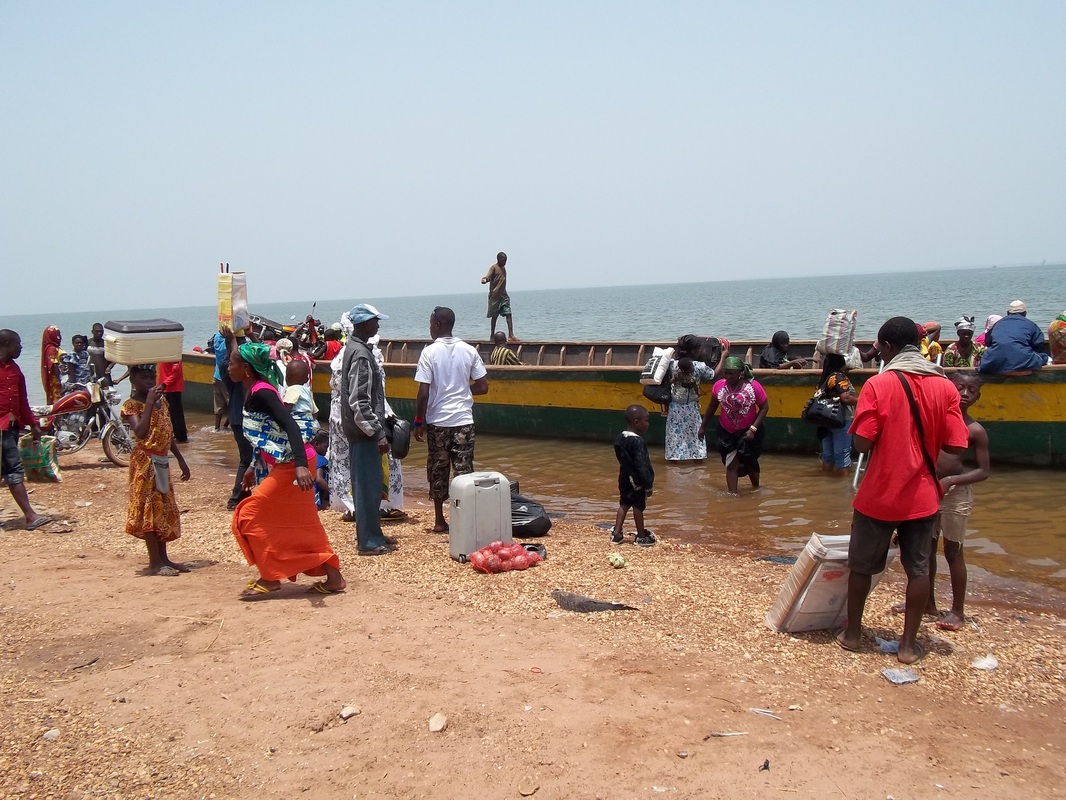
I spent March 15 in Kwame Danso, the district capitol of Sene, in Brong Ahafo. I wouldn't recommend it as a tourist destination. It's about a 1.5 hour motorcycle ride off the paved road, assuming you've got a decent bike and a decent amount of experience riding on sand.
Once you are there, the town has one paved road (it's not clear what for), one filling station, and about 6 guesthouse rooms. My survey team had maxed out the rooms, so I ended up crashing on the cement floor. After meeting with my team, I was glad to be on my way to Tamale the next morning. I left with the sunrise, and was in Yeiji to make a bank transaction by 10am. From Yeiji, the moto and I had to cross the Volta River to get to Tamale. We waited for a couple hours for a boat. When it landed, people poured out, running up slope from the water and shouting for joy. I'll admit this made me a little nervous. The boat was essentially a very large canoe. There is a proper ferry, that can take cars and lorries, but it goes less frequently. I paid 10 GHC for me, my moto, and my bags. Five men loaded the bike with apparent ease, lifting it over the side of the boat. They refused any dash for loading. The people were loaded less gracefully. We waded into the possibly bilharzial water, then climbed what must have been an old pool ladder to get into the boat. In the boat, passengers sat on cross bars, their feet dangling above a pair of small boys using buckets to bail water out of the bottom of the boat. The ride across the Volta took a little over an hour. Or, it would have, if the motor had not stopped in the middle of the lake. We drifted for about 20 minutes. I was seriously contemplating going for a swim when the engine was coaxed back to life. We corrected our course, weaving through fish nets tied to floating soft drink bottles. After arriving back on shore, it was back to the dusty road. It took about an hour to get to Salaga, and 2.5 hours to go from Salaga to Tamale. The road was in better condition than I have ever seen it-- which isn't saying much. On the way, I came across a broken-down motorking with a cow in the back. I stopped to ask the group of men walking near it if they needed help. They declined and told me I shouldn't stop for people on the road. I laughed and asked them what robbers would be doing with a cow and a spoiled motorking. Coming in to Tamale was a relief. I had sun-burned my hands the day before, and the hot wind on them felt like taking a hot shower after a bad burn. I was in for one more adventure, though-- a shake down from the friendly Tamale neighborhood police. Details in my next post. Last night, I was traveling by trotro from Kintampo to Tamale. We stopped at a police check point.
"Driver, close your boot!" I saw them pack the boot (what they call the trunk here). There's no way the boot is closing. Damn. That means I have to flirt with the other officer, who is yelling "My wife! My wife!" at me. I ask his name and tell him that I have to go to Tamale, and the faster we go the faster I can come back and marry him. We are waved on our way, along with our still-unclosed boot. When people think about corruption, they often think about it in terms of money. If your boot can't close, you pay a small dash so the officer will let you continue your journey. If you want a driver's license, you pay a dash to get it done in one day rather than three. If you overstay the 60 day limit on your visa, you pay a dash to avoid a renewal process that is very costly in terms of time and effort. But there is another currency that those who extort bribes will often accept: flattery and flirtation. I have never paid money to police at a checkpoint, but I have paid in smiles, jokes, and fake email addresses. Is this a good thing? I'm not sure. At its best, it feels like nothing more than being friendly, and the person you are interacting with can go from being a hurdle to a helper. At its worst, deferring to or faking interest in someone who is clearly on a power trip feels degrading. An interaction like the one with the trotro leaves me feeling like I have prostituted myself in small way, and more than I hate that authority figures have the power to extort money, I hate that they have the power to extort me as a sexual or romantic object, even if only in very small ways. My conclusion is that corruption is not about money, it is about power. You can reduce the bribes paid to zero, and still have corruption. That means that focusing on punishing people for taking bribes won't solve the problem-- graft will be paid in other currencies, such as favors. Fixing corruption is about limiting the discretion of individuals--setting up systems with clear rules and expectations-- to take away their ability to extort anything, be it money or my Facebook name. I spent about 10 days in the United States over the holidays. One day, I took a bus through Columbia Heights to downtown DC. Bus trips in Ghana tend to be eventful, and the less you pay for your ticket, the more eventful they will be. But I used to take the bus regularly in DC, so I was expecting a quiet trip.
It was not to be. A lady in leopard tights and a shiny black purse boarded the bus without paying and took the seat next to me. Passengers sometimes board, sit down, find their metro cards, and then pay, but after a couple of stops it became apparent she had no intention of paying. The driver quietly told her she needed to pay before he could continue. The woman responded with an impressive string of profanity. I waited for the tongue-clicks, exclamations, and chiding that she would be sure to receive from the rest of the passengers. Silence. I looked back and not a single passenger was even looking at the woman, although they all must have been aware of the situation. I wondered if I should say something. After a moment's thought, I decided not to. When I first arrived in Ghana, I stayed out of public altercations, as I knew that I did not have the cultural context to react appropriately. I realized that my situation, in my home country, in a city I knew well, was now analogous. The bus driver had likely been trained in how to handle non-paying customers. Sure enough, after blowing off a little more steam, the woman got off the bus, although she continued to verbally abuse the side view mirror after the bus doors had closed behind her. 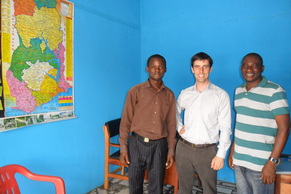 How do you find an office in a town in Ghana? Mostly, you walk into town, chat up everyone you meet, tell them you are looking for an office, and give them your contact number. People are usually happy to help. Be outgoing, and soon you can have a beautiful, blue office like ours.
The Ghana Driver's Manual gives the following advice:
Beware of pedestrians. Take extra precaution when approaching fruit trees. Children are more interested in fruits than in traffic. I will say, when traffic consists of a white girl on a moto, this is patently false. |
About Liz
I have worked in economic policy and research in Washington, D.C. and Ghana. My husband and I recently moved to Guyana, where I am working for the Ministry of Finance. I like riding motorcycle, outdoor sports, foreign currencies, capybaras, and having opinions. Archives
December 2016
Categories
All
|
 RSS Feed
